Multi-Cloud Resource Inventory & Asset Tracking
The Resource Inventory catalog (/resource-inventory) delivers single-pane-of-glass asset tracking across all connected multi-cloud providers, regions, and bare-metal environments. It categorizes compute instances, persistent storage disks, load balancers, and public IP allocations while proactively identifying orphaned and unutilized infrastructure.
Inventory Dashboard
The inventory catalog lists all active, stopped, and allocated resources with metadata tags, cost attribution, and owner associations.
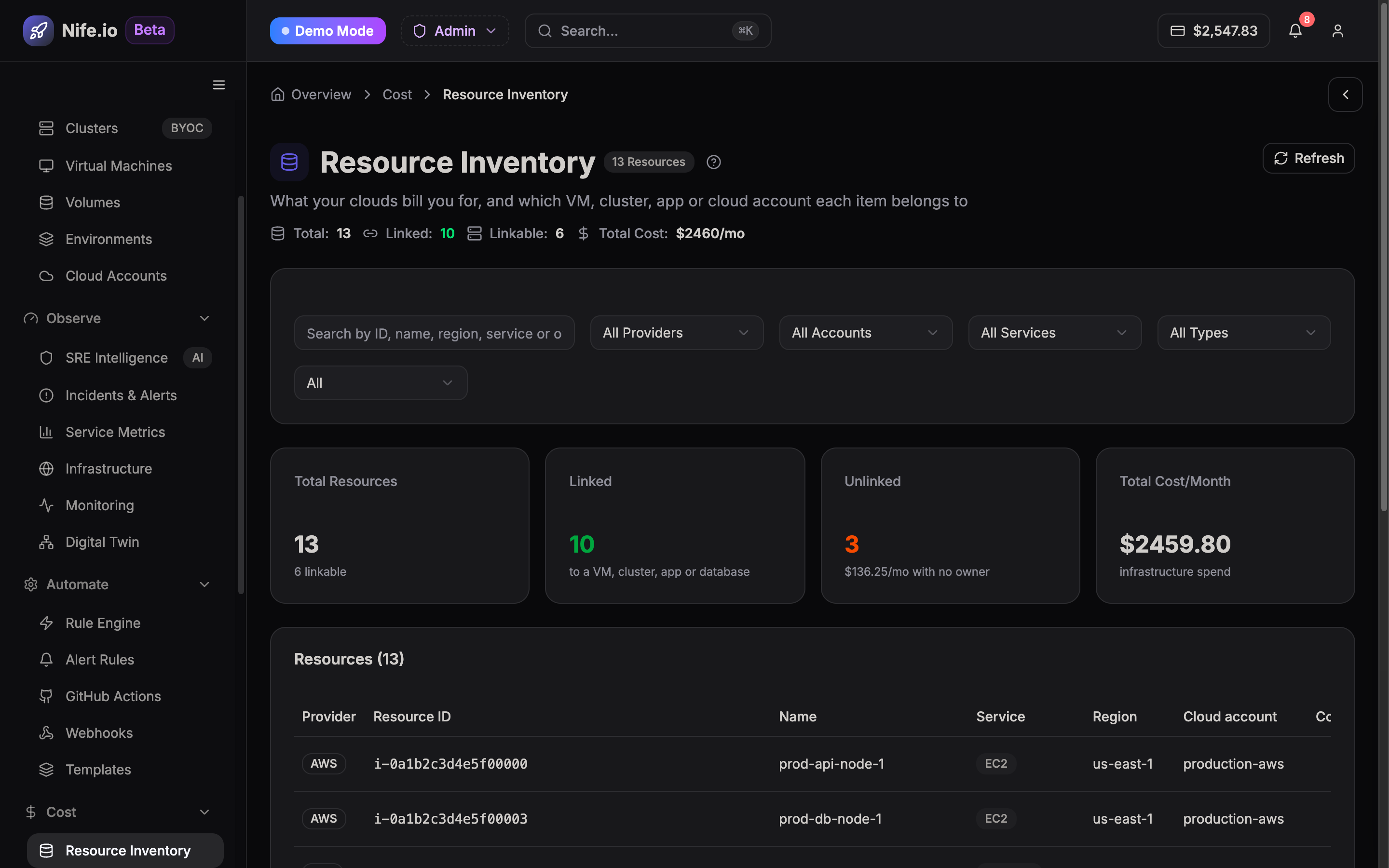
Cataloged Asset Categories
| Resource Type | Tracked Attributes | Optimization Alerts |
|---|---|---|
| Compute Instances & VMs | CPU cores, RAM size, Cloud Provider, OS Image, Public/Private IPs | Stopped instances incurring storage fees; under-provisioned instances |
| Persistent Volumes (Disks) | Volume size, IOPS tier, Storage class, Mount status, Cluster association | Unattached orphan disks generating unnecessary monthly cloud spend |
| Load Balancers & Ingress | Protocol, Forwarding rules, Attached certificates, Monthly throughput | Idle load balancers with 0 active backend endpoints |
| Elastic & Public IPs | Allocated IP addresses, Cloud region, Binding target | Disassociated public IP addresses incurring hourly idle cloud charges |
| Kubernetes Clusters | Version, Node count, Provider tenancy, Control plane status | Deprecated Kubernetes versions nearing end-of-life (EOL) |
Orphan Resource Detection & Cleanup
One of the largest contributors to runaway cloud infrastructure costs is unattached storage and idle network resources:
- Automated Orphan Detection: Scans every 6 hours across all linked cloud accounts (AWS EBS, GCP Persistent Disks, Azure Managed Disks) to flag storage volumes disconnected from any active VM or container.
- One-Click Release: Terminate or archive orphan assets directly from the Nife console without logging into multiple cloud provider management consoles.
- Tagging & Cost Center Mapping: Assign financial cost centers and environment tags (
Production,Staging,Development) to track resource ownership and chargeback.